Showing posts with label Bonsai Care. Show all posts

20 December 2024

February 2025 Make and Take a Bonsai Class


 SATURDAY 01 February 2025 

AT 10 AM – 3 PM

Make and Take a Bonsai Class

 at Bonsai Beginnings


Make and take home your own little tree as you learn the history and techniques of growing beautiful Tropical Bonsai (ficus, Portulacaria, schefflera) Bonsai with expert Luigi Trapani. @ Noon We Will Break, Bring a picnic lunch if you like. Cost: $75 per person- includes soil, wire, and use of bonsai tools. Then purchase the bonsai tree and bonsai pot of your choice at the class; various aged trees and appropriately sized pots are available.

To Register or

Make an Appointment


27 August 2024

August 2024 Make and Take a Bonsai Class at Bonsai Beginnings

 SATURDAY, 24 August 2024 

AT 10 AM – 3 PM

Make and Take a Bonsai Class

 at Bonsai Beginnings


Make and take home your own little tree as you learn the history and techniques of growing beautiful Tropical Bonsai (ficus, Portulacaria, schefflera) Bonsai with expert Luigi Trapani. @ Noon We Will Break, Bring a picnic lunch if you like. Cost: $75 per person- includes soil, wire, and use of bonsai tools. Then purchase the bonsai tree and bonsai pot of your choice at the class; various aged trees and appropriately sized pots are available.

To Register or

Make an Appointment


Hibiscus tiliaceus Sea Hibiscus
Brazilian Raintree
Chloroleucon tortum


Hibiscus tiliaceus
Sea Hibiscus


Crimson Bullhorn Acacia 
Acacia cornigera 


22 June 2024

Make and Take a Bonsai Class at Bonsai Beginnings

 SATURDAY, 20 July 2024 

AT 10 AM – 3 PM

Make and Take a Bonsai Class

 at Bonsai Beginnings


Make and take home your own little tree as you learn the history and techniques of growing beautiful Tropical Bonsai (ficus, portulicaria. schefflera) Bonsai with expert Luigi Trapani. @ Noon We Will Break, Bring a picnic lunch if you like. Cost: $75 per person- includes soil, wire, and use of bonsai tools. Then purchase the bonsai tree and bonsai pot of your choice at the class; various aged trees and appropriately sized pots are available.

To Register or

Make an Appointment


28 February 2024

 SATURDAY, March 23, 2024 AT 10 AM – 4 PM

Make and Take a Bonsai Class at Bonsai Beginnings


Make and take home your own little tree as you learn the history and techniques of growing beautiful Bonsai with expert Luigi Trapani. @ Noon We Will Break, Bring a picnic lunch if you like. Cost: $75 per person- includes soil, wire, and use of bonsai tools. Then purchase the bonsai tree and bonsai pot of your choice at the class; various aged trees and appropriately sized pots are available.

To Register or

Make an Appointment


29 June 2022

Make and Take a Bonsai Class at Bonsai Beginnings (Tropical Trees) 23 July 2022

 23 July 2022

Make and take home your own little tree as you learn the history and techniques of growing beautiful Tropical Bonsai with expert Luigi Trapani.

10 AM- 4 PM

Cost: $53.50 per person- includes soil, wire, and use of bonsai tools.

Then purchase the bonsai tree and bonsai pot of your choice at the class

Various aged trees and appropriately sized pots are available. Bring a picnic lunch, @ Noon Break for Lunch

For Tickets


Bonsai Class at Bonsai Beginnings 


27 May 2021

Water, Water, and Water again


Do not forget to water bonsai 
There is no faster way to kill trees.


water spray


With days in the 90′s and nights in the 50′s to 60′s
Don’t Forget To Water!!! 


Place bonsai in the shade

30% shade in Savannah


Place Trees In The Shade- This will help the most. Full-sun in New York is about 30% shade in Savannah. Our plants growing in full-sun this summer are showing signs of stress. While plants are adapted to the sun, there can be too much of a good thing. The plants given shade/filtered light are greener and healthier than those in full-sun for the summer. 


Do not forget to water bonsai 
There is no faster way to kill trees.


Soil maintains a comfortable, stable temperature year-round, but in containers roots can be overheated due to high temperatures. Shade the containers to cool down soil temperatures and prevent overheating


Do not forget to water bonsai 
There is no faster way to kill trees.


Watering the leaves of a Chinese Elm

 Chinese Elm


Water the Foliage- Watering the leaves of your bonsai will cool the foliage. The heat and low humidity evaporate the water off of the leaves before it can take the water out of the leaves. This is especially important for trees that have been allowed to dry too much between watering as it reduces their stress. Please keep in mind that watering the foliage in the cooler night and evening temperatures may cause fungal problems for certain species. In hot, dry air this moisture evaporates before there can be a problem. 


Do Not Bring Temperate Bonsai Inside- Due to the constant use of air conditioning, bringing bonsai indoors that have been growing outdoors will not be the best thing for them. Air-conditioned air, while cooler, is extremely dry. Dry air with low light is stressful for temperate plants, and it is the worst thing for hardy trees.


Do not forget to water bonsai 
There is no faster way to kill trees.


Japanese juniper


Junipers and pines will not give warning by wilting in advance. If they have been forgotten, follow the previous three steps and hope for the best. There is not much else one can do.


   Do not forget to water bonsai 
There is no faster way to kill trees.


02 October 2020

Do you have your “frost blankets” ready?

We are having the first cool mornings in Savannah forewarning of the soon-to-come autumn. With that snap in the air, it’s time to prepare the winter quarters of the cold sensitive trees............... 


Solidago blooming!


light, moderate, or hard?

Light freeze: 29°F to 32°F—tender plants killed, with little destructive effect on other vegetation.

Moderate freeze: 25°F to 28°F—widely destructive effect on most vegetation, with heavy damage to fruit blossoms and tender and semi-hardy plants.

Severe freeze: 24°F and colder—damage to most plants.


Callicarpa americana-  American Beautyberry


The freezing temperatures here in Savannah are at night- until the sun rises. So we are dealing with hours of freeze, not months.
Our frost-free growing season is around 268 days.

Each winter, on average, our risk of frost is from November 24 through March 1.

Almost certainly, however, we will receive frost from December 14 through February 10.

We are almost guaranteed that we will not get frost from March 20 through November 4.


Chinese Quince-Pseudocydonia sinensis  Fruit ripens in mid to late autumn


The freezing temperatures here in Savannah are at night- until the sun rises. So we are dealing with hours of freeze, not months.

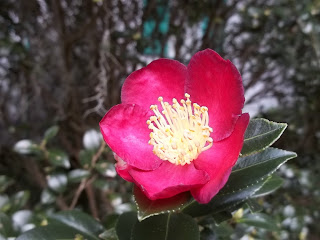
Sasanqua are fall bloomers


The level of available potassium in the soil will increase a tree’s frost resistance.


Bald cypress cones

Keep a few old sheets and blankets around and keep your tender trees out a bit longer and to protect less hardy tree's roots and pots on those coldest nights. Laying a light to medium-weight blanket on top of tender trees gives approximately five degrees of extra warmth. But sheets and blankets become wet with condensation and dew, ice up and stick to leaves and conduct heat away from the plant. Plastic materials that do not breathe are worse. Plastic can damage plants on warm, sunny days.  The heat builds up under the plastic and if it touches the leaves they can be scorched.


Potted plants are particularly susceptible to frosts because the roots are less insulated. If you are unable to put container plants indoors, wrap the pot in fabric or simply bury the pot in the ground or cover with mulch, in addition to protecting the foliage.


time to collect Japanese Maple seed when the wing coverings of the  samaras dry


Frost Protection Blankets,Heavy Floating Row Plant Blanket Fabric Covers,Garden Warm Frost Cloth Outdoor for Winter Frost Cold or Pests. Floating Plant Blanket Covers provide approximately 2-8 degrees of cold protection, depending on the thickness.  A non-woven fabric that breathes, preventing heat build up, Floating row covers can protect your crops from frosts, and even heavy freezes.


Nurserymen and farmers often use 'frost blankets' to  cover  crops, This white, spun polypropylene fabric can be purchased from most nurseries. This lightweight fabric can add 2-5 degrees F to the temperature. This covering is breathable: some air, water, and sunlight pass through. Unlike plastic sheeting you can leave garden blankets on plants throughout the day without harming them.


Japanese Maple in the snow


The floating cover protects trees from the cold, shielding the trees from wind and winter burn. Frost blankets are put directly over the trees creating a layer that traps in the ground heat. All sides of the frost blanket must be sealed to keep the freezing air outside. The fabric is lightweight and can be reused many times. For severe cold use two layers with a layer of polyethylene film on top. For a few more degrees of protection on extra cold nights try Christmas lights under the blanket. 
Japanese Maple in Autumn


The Wall-of-Water® is a cone-shaped ring of connected plastic tubes filled with water that surrounds a single plant; there is a significant amount of heat released as water freezes. A Wall-of-Water can provide overnight frost protection down to upper-teens.


Camellia seed pods beginning to crack open

06 August 2020

Time to Defoliate


In summer the dwarf Schefflera 
can handle radical pruning
 and come back strongly


Dwarf Umbrella Tree  
Hawaiian Schefflera
Schefflera arboricola
sheff-LEER-ruh
ar-bore-rick-KOLE-luh


A month after hard pruning


Schefflera arboricola
tolerance of neglect

A robust tree that does well both indoors and out and can adjust to a wide range of indoor conditions; it's not winter hardy outdoors in cold climates. 


Umbrella Tree


The Schefflera develops a rough wood-like trunk and branches that make it ideal for bonsai cultivation. The roots on a mature Dwarf Umbrella Bonsai give the effect of a banyan tree – and the style is called – Banyan.


2011 schefflera arboricola


1992 schefflera arboricola
Shefflera like slightly moist soil, but do not allow the soil to dry out can handle some under watering. But over-water it and rot the roots and kill the plant. Provide even, consistent watering. When one does water, water thoroughly. Rinse off any dust from the leaves. In winter water the plant sparingly as the plant requires less water because the tree is resting. Yellow, falling leaves is often the result of too much water. When kept indoors or under cool conditions, Schefflera arboricola does not like "wet feet"! Let it dry out and water less in the future. Empty that saucer! Out in the good old summertime the tree will quickly use any water in a tray, but too much direct sun may cause the leaves to yellow.


Hawaiian Umbrella Bonsai Tree


Can tolerate low light, but grows more strongly with high light but, the more light, the more compact the stronger the growth. If Shefflera gets thin, long and leggy- It is not getting enough light. Move it to a brighter spot.

Shefflera are tropical trees and prefer to be above 55F but must be kept above freezing. Shefflera appreciate being outdoors in summer. They prefer to be where it is warmer. When the AC comes on it is time for their summer vacation- fresh air, sunlight, strong healthy growth. Fertilize during this period of active growth.


schefflera arboricola 
 in suiban


Under very high humidity conditions Schefflera will produce aerial roots that, when they reach the ground, will convert to fully functional roots. Hawaiian Umbrella Bonsai Tree has interesting aerial banyan roots. The roots on a mature Dwarf Umbrella Bonsai give the effect of a banyan tree. Aerial roots on some of the tree species of Ficus and Schefflera continue to grow until they touch the ground and get entrenched. Initially, they draw moisture and nutrients from the air, but once they get embedded in the ground they derive their nutrition from the soil. Amid the numerous aerial roots that spring, only a few succeed in reaching the ground and getting through the soil. While the aerial roots embed to the ground and grow, they thicken considerably and form secondary trunks.


Janine


This small-leafed Schefflera develops a rough wood-like trunk and branches that make it ideal for bonsai cultivation. Robust tree that does well both indoors and out and can adjust to a wide range of indoor conditions; it's not winter hardy outdoors in cold climates.


Most growers prefer to use the “clip and grow” technique. Above the attachment point of each leaf is a bud on the tree from which a new branch will grow. By pruning about an inch above a leaf where the bud is pointing is the direction in which the new branch will grow.


28 July 2020

Time to start looking for ripening Japanese Maple seed!


Japanese Maple seeds! 

When the seed mature, the wings begin to dry and turn brown


 Japanese Maple 
Momiji 
Acer palmatum


 Japanese maple seed in midsummer


It All Begins With a Seed 


Japanese maple seed tips of the
 wings turn brown in late summer


Japanese maple seed wings drying


Bonsai grown from seeds are called Misho bonsai.


Many poke fun at the idea of starting a bonsai from a seed. “Look how old I am I don't have time", but the creation of a bonsai from a seed is very rewarding. 


From Japanese maple seedlings  
Tsukamiyose

There is no such thing as a "bonsai seed". The packs of seed marked as such, are just ordinary tree seeds that can be grown into a bonsai. They are a good source of tree seeds when none are locally available. Bonsai grown from seeds are called Misho bonsai.


Once the new leaves come out
 in the spring,  flower 
and seed begin to appear 
on Bloodgood Seedling 


Tsukamiyose A natural planting can be created by scattering several to several dozen seeds in a tray. The seedlings are planted very close to each other and develop into multiple trunks with each tree naturally competing for its own light and space.


"I started it from seeds myself."


Getting tree seeds to sprout:

Most tropical trees will germinate as soon as they ripen, but seeds from most temperate trees need to be sown after stratification. Stratification is a period of artificial winter that trees that are not tropical need to set off the internal clock that spring triggers and makes seed sprout as temperatures rise. Depending on the seed species, they will need 21 to 90 days of cold storage to begin to sprout. This can be done in the home refrigerator.  Use zip-lock sandwich bags with damp peat moss. A fungicide can be used in the media to keep soil borne diseases from killing the seedlings. If any of the seed germinate in the refrigerator, plant them.


When the artificial winter is over, the seeds are ready to be planted.  It is suggested that they be soaked overnight in room temperature water to improve germination percentages. Seeds that float after soaking won't germinate so toss them out.


Japanese maple seed


Sow the seed in a light and friable soil mixture is so that it drains well to prevent fungus and sprinkle peat moss over them. Air should move to prevent damp-off. The air movement he says simulates natural outdoor conditions. Light friable soil dries quickly and seedling with their minimal root system can be killed in a few hours from dryness, or direct sun!


Alternatives:
Chamomile tea - 2 tsp of chamomile flowers to 1 cup of boiling water allow to steep overnight or at least until cooled. Strain and then use as is to moisten growing medium before planting seeds then use in a mister to spray soil. Sage or garlic teas also have been used. Soak the seeds in a solution of hydrogen peroxide and water (1 teaspoon to 1/2 cup of water) to remove any lingering bacteria on the seeds. Some lightly sprinkle a bit of cinnamon or baking soda over planting mix used as a fungicide on plants for mildew.Two cap-fulls of household bleach in the water used to dampen your peat moss or vermiculite could act as a fungicide.


Always make sure horticultural tools are disinfected even if they are new, and that your planting pots are disinfected....

Disinfection of Horticultural Tools and Pots


Protect that
"Empty pot of soil"

Plant tree seed in the Fall and let Mother Nature take care of your stratification. Just remember to protect them from rodents (squirrels and mice) and label that “empty pot of soil”. Once I was talking with a fellow enthusiast in the nursery and he started raking his fingers through a tray filled with soil and began talking about soil mixes. I should have labeled that flat as I had seeded the tray with  Jacaranda for a Tsukamiyose the day before!


Second summer


Growing 'misho' bonsai is economical and rewarding.


the embryonic root emerges from the seed  


Seed germination begins!
Time to move them out of the cooler and into some good soil. 


The cotyledons are the embryonic
 "first leaves" of a seedling


True Leaves emerge